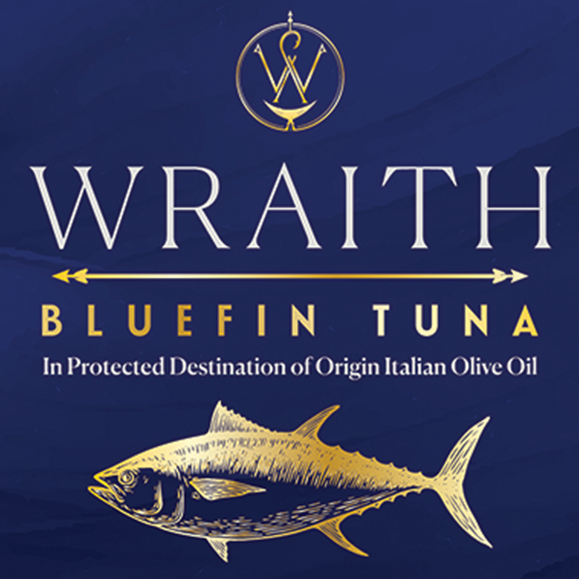


Wraith | Bluefin Tuna Brand Identity
Role: Senior Art Director
Scope: Logo system, jar label, box design
Category: Premium conservas / specialty grocery
Status: Designs final · Launch pending
The Challenge
A four-generation New England fishing family wanted to put their own bluefin on a shelf instead of selling it off the dock. The launch is 3,500 jars, Connecticut only, built to prove premium positioning before wider distribution.
Bluefin is the most expensive fish in the case. The packaging had to carry that price with no brand behind it yet.
The Insight
Premium tinned fish has settled into two looks. Bright and illustrated, or plain and rustic. Both read as pantry.
Bluefin doesn't belong in the pantry. It sits closer to caviar and single-barrel spirits, which meant designing against the category rather than into it.
The Idea
The name already carried the brand. Bluefin move like shadows through the North Atlantic, elusive and rarely caught by anyone who doesn't know the water.
Build the identity out of dark water and gold. Then make the provenance physical: a blank field on every box for the vessel name and where the fish was caught, filled in by hand. "Catch to jar" stops being a claim and becomes something printed on the box you're holding.
The Solution
Built a W monogram from the tools the family actually fishes with: harpoon dart, circle hook, tuna tail
Set the wordmark in a high-contrast serif, wide letterspacing, silver and muted gold on North Atlantic navy
Designed the jar label around a 9oz clear straight-sided bottle so the product stays visible through the glass, finished with a gold lid
Designed the outer box including the family story panel, signed by the co-founder, and write-in fields for vessel and catch location
Printed a nautical chart of the New England coast inside the box, visible only after opening
Presented nine directions in round one, four refined combinations in round two
The Outcome
The client selected two of the nine directions presented, both mine, and asked for them to be combined. Round two developed four iterations from that pairing.
Final designs are approved and moving to printer mechanicals ahead of the Connecticut launch.